


The marketing automation industry is expected to be worth $11bn by 2030.
It’s unsurprising, then, that the list of marketing automation platforms to consider is growing year-on-year, making it harder than ever to find the right platform for you.
Short on time? I’d start with ActiveCampaign if you need multi-step automation and AI-assisted sequence improvements. Basic newsletters don’t justify its complexity, and its CRM is limited. For an eCommerce store, consider Omnisend.
Despite an endless variety of marketing automation services to choose from, I’ll focus on seven that stood out after conducting our annual review of 100+ email marketing & automation tools.
Our recommendations are based on a comprehensive study that looked at over 100+ marketing automation products and included surveying over 10,000 marketers for their feedback on their marketing automation provider. I’ve also shared my personal experiences using these platforms where possible.
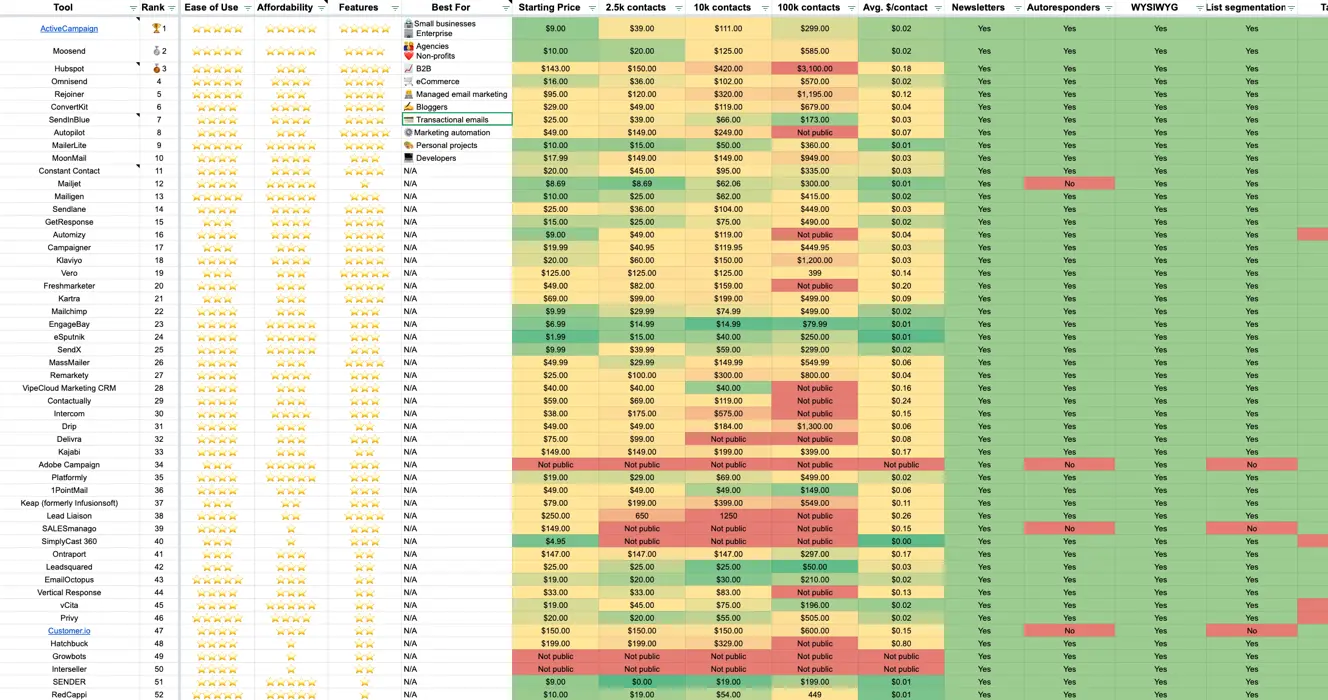
The dataset we use to determine the top 10 marketing automation software providers is linked at the end.
The best marketing automation software at a glance
| Tool | Best for | Price from | Free plan / trial |
|---|---|---|---|
| ActiveCampaign | Teams running lifecycle automation | Contact-based; see current plans | 14-day free trial |
| Brevo | Budget automation & large lists | $0 (300 emails/day) | Yes - unlimited contacts |
| Mailchimp | Simple email automation | $20/mo (500 contacts) | Yes - 250 contacts |
| Campaigner | Simple AI-assisted email | $14/mo (1,000 contacts) | 30-day free trial |
| HubSpot | B2B & agencies | $890/mo (Marketing Hub Pro) | Free CRM (no automation) |
| Kit | Creators | $0 (free to 10,000 subs) | Yes - 10,000 subscribers |
| Omnisend | eCommerce (#1 pick) | $16/mo | Yes - free plan |
Mailchimp pricing verified September 2026; other listed prices date from April 2026, monthly billing. ActiveCampaign pricing depends on the plan, contact count and billing term. A fuller pricing comparison at 2,500, 10,000, and 100,000 contacts sits further down the page.
First things first, though. With so much variation between services, what do you need to look out for when comparing software providers?
What to consider when comparing marketing automation software
Before we go into the pros and cons, or the pricing comparisons, it’s important to know what to look out for.
I know several friends who signed up for marketing automation software, only to realise one month down the line that it wasn’t compatible with their CRM. Ouch.
It’s also very easy to get burned by the sliding scale pricing structures and unexpected additional costs.
It pays to do your research. Below are a few important considerations and questions to have in mind when comparing the marketing automation software.
Let’s start off with the deal-breakers. These are the first things you should look out for when comparing marketing automation software providers.
Deal breakers:
- Pricing - Most marketing automation tools are priced on a sliding scale with additional costs for training and add-ons. They can become ludicrously expensive very quickly if you’re not careful. I’d recommend taking a 3-5 year perspective when weighing up your options.
- Usability - Marketing automation is inherently complex. As such, usability matters because it’ll determine how much value your team extract from the tool. The less intuitive the software is, the more you will pay for training, and the more headaches your team will endure.
- Integrations with your existing software - This matters, yet sometimes gets overlooked. Some marketing automation tools only allow integration with a small number of third-party apps / CRM systems.
Now let’s look at the preferences. Some of these may be deal breakers for you, but they’re mostly to do with which features the software providers offer.
Preferences:
- CRM / sales capabilities - Some marketing automation tools have an in-built CRM system with lead scoring, and advanced tagging capabilities. Others have no in-built CRM, as they expect you to connect the software with your existing CRM. We’ve compared the tools that do both well in our guide to the best marketing automation CRMs.
- Email capabilities - while all marketing automation tools enable email marketing in some capacity, some are better than others. Do you need drip campaigns? subject line A/B testing? Demographic segmentation?
- Content capabilities - Do you need to create landing pages, webinars, or other forms of content to send out to your contacts? While most marketing automation tools enable this, some are easier to use and more extensive than others.
- e-commerce capabilities - Do you sell products online? Some marketing automation tools, such as Omnisend, integrate directly into your e-commerce platform.
- Social media capabilities - Some marketing automation tools integrate with Facebook and X (formerly Twitter), enabling you to control social advertising or build social apps from within the service. Some also offer social media monitoring, to pull comments made on social media platforms into your CRM. These features are usually nice-to-haves, but it might be worth considering whether they would be useful for you.
- Training & set-up is another consideration: how long will it take your company to implement the marketing automation software, and at what cost? This is not particularly well advertised on any of the software provider’s websites, so be sure to ask.
Comparing marketing automation software
Here’s the gist on the main pros and cons of each marketing automation provider.
01ActiveCampaign
Test Lab Partner (Paid)ActiveCampaign is a member of our Test Lab Programme, which means we receive a fee to conduct hands-on testing of their platform. Learn more about our Test Lab Programme →I first used ActiveCampaign in 2012, and we’ve since run it across eight portfolio companies, sending over 124,000 emails. ActiveCampaign is a paid Test Lab partner, and we earn commission through our links.
I’d keep it first if your team needs multi-step lifecycle automation and AI help improving existing sequences. Its CRM and reporting feel neglected. Reaching human support takes more effort than I’d like.
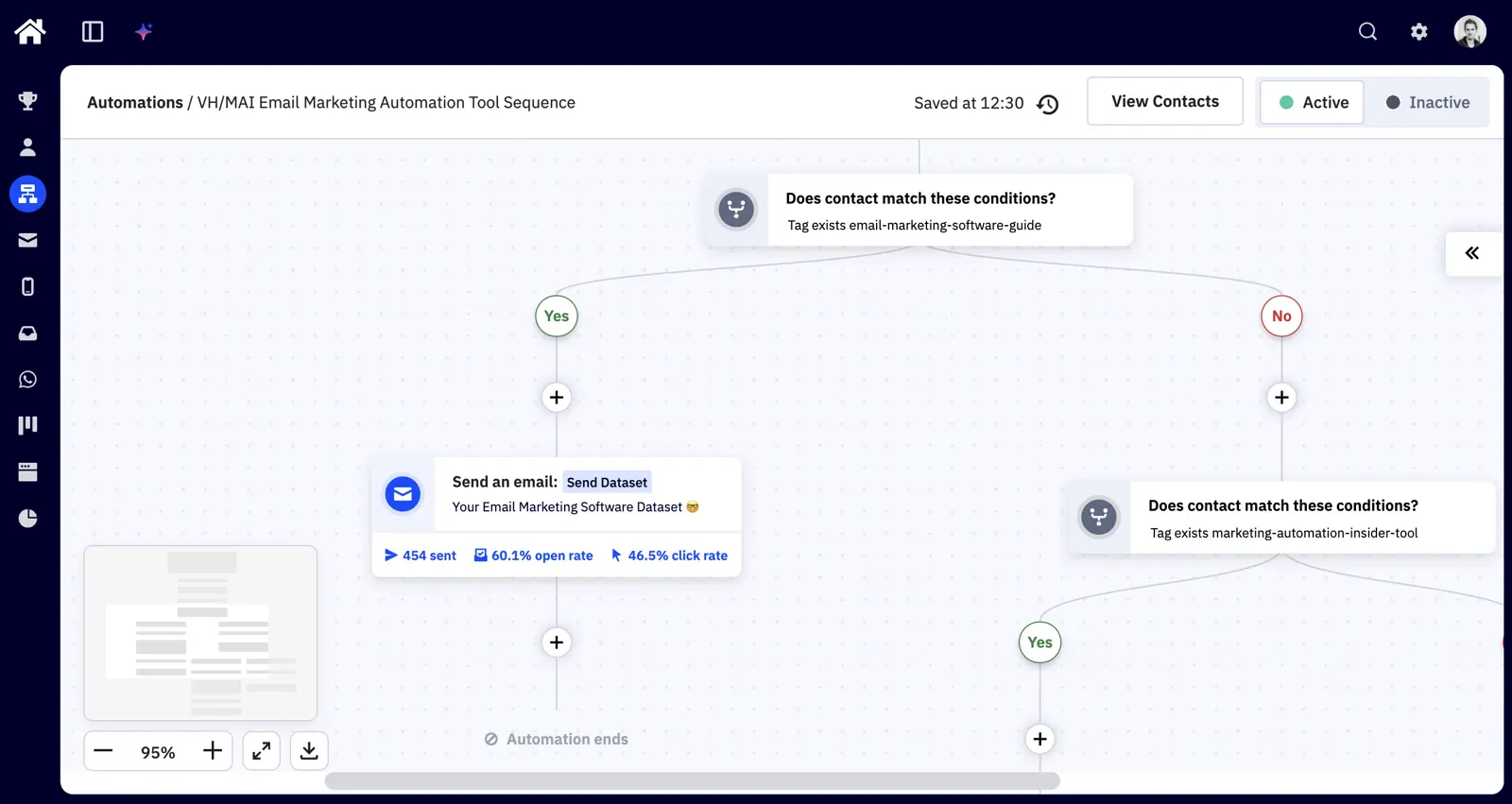
The visual builder lets us connect conditions, waits and goals into sequences that respond to what contacts do. More advanced workflows need careful plan selection: Starter limits each automation to five actions.
Active Intelligence was most useful when I asked it to critique an existing onboarding sequence. It spotted an unfinished A/B test, a high unsubscribe rate and a missing preheader, then suggested a prioritised plan.
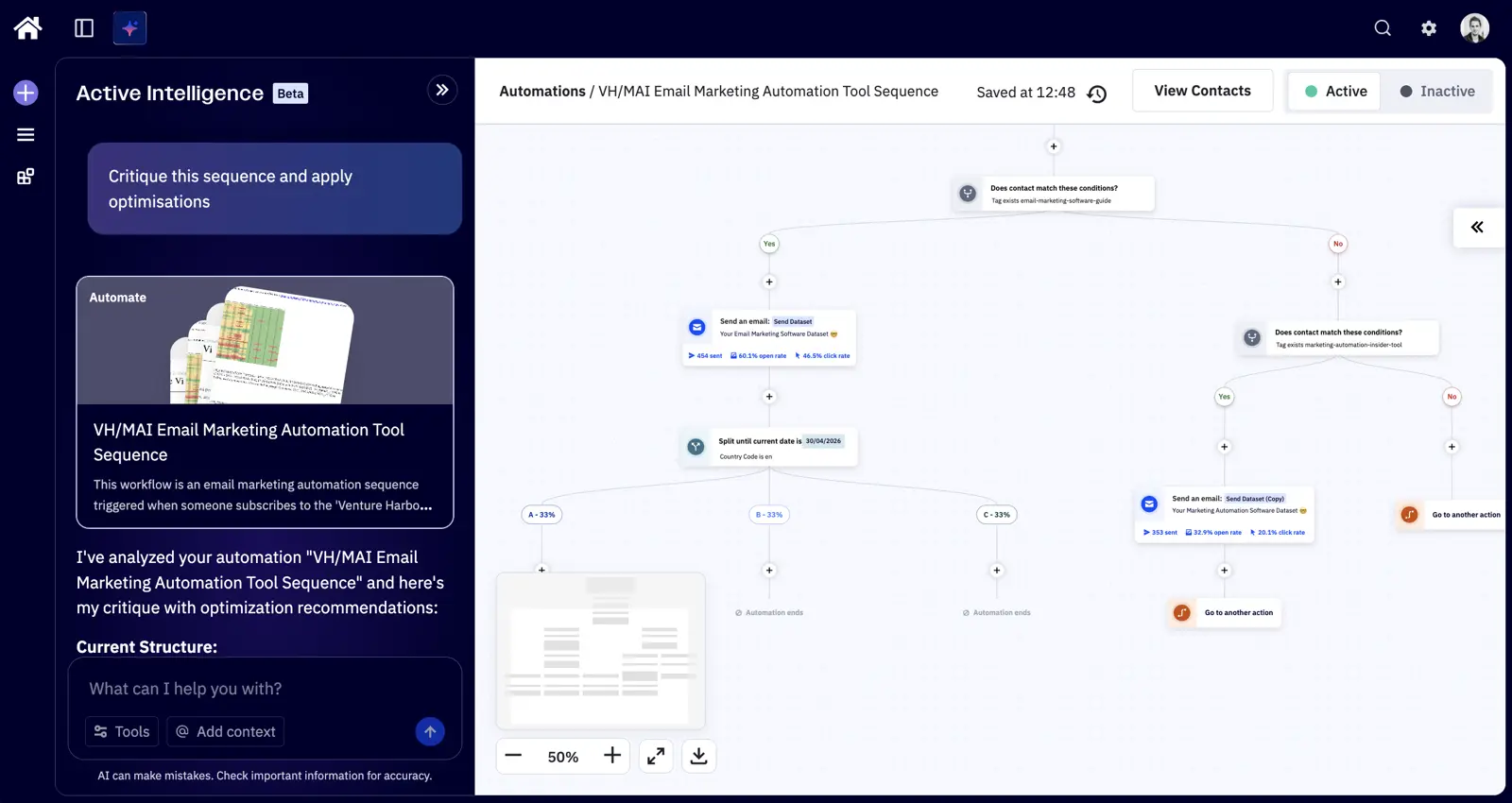
When I asked it to implement changes, it added goal exits, a day-seven re-engagement branch and a 48-hour non-opener resend. It couldn’t create the A/B split actions itself, so I still had to intervene.
The screenshot below shows Active Intelligence opening our Test Lab enquiry workflow after a request to critique it. It starts by fetching the step-by-step structure before offering a critique.
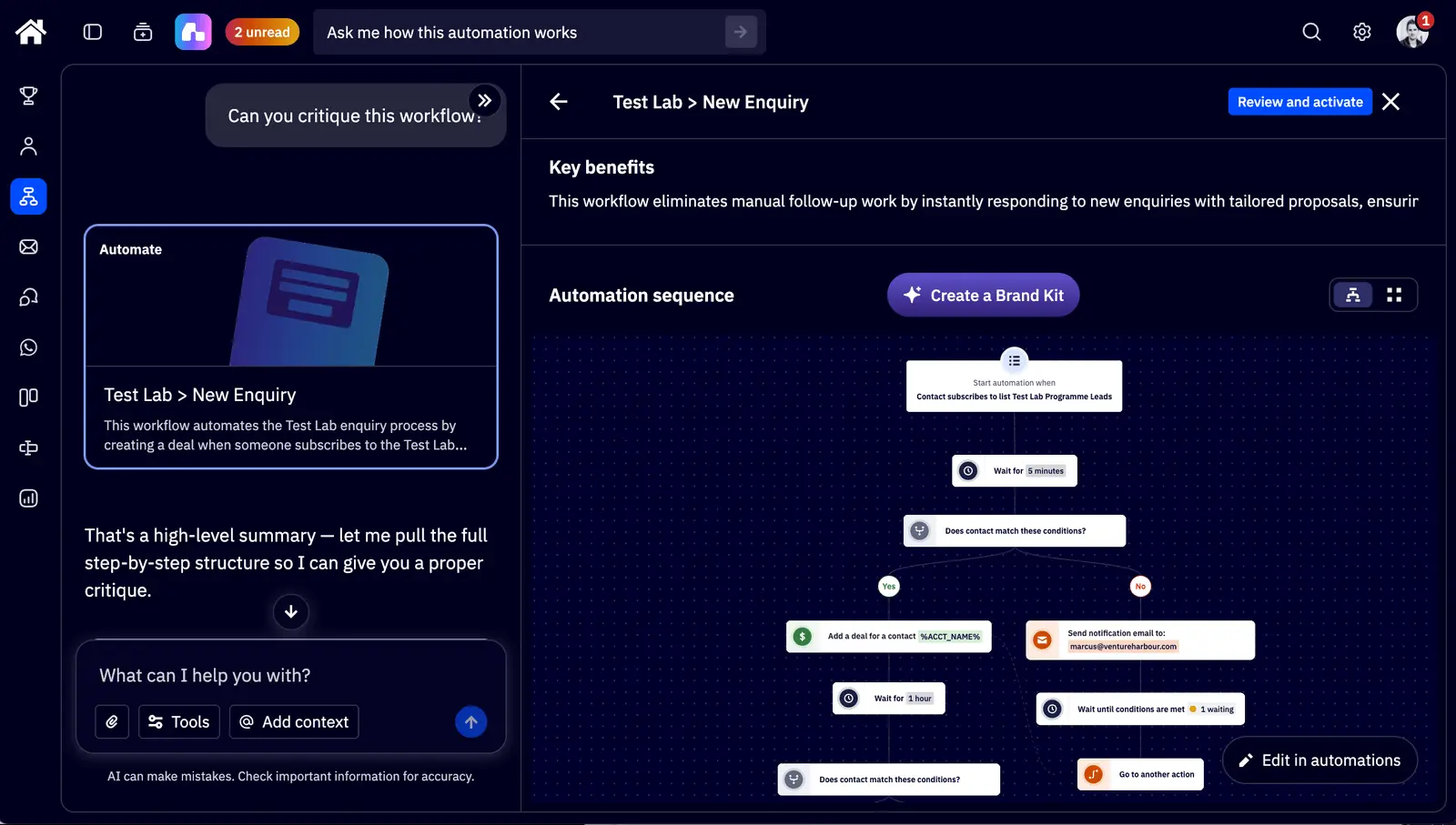
Campaign drafts also needed checking: my one-shot email prompt produced a campaign that ignored the requested one-image, one-column layout. I’d use the AI to suggest optimisations, with someone checking each change before activation (especially anything presented as an A/B test).
Here’s the latest test, including the automation and Active Intelligence findings:
Our ActiveCampaign review records a 32/40 result across eight tests. Automation was the strongest area; the CRM, reporting and support kept it from scoring higher.
For pricing, I’d budget around the Plus or Pro features you need, rather than choosing on the entry price alone. Check the current plans for your contact count, billing term and CRM or SMS add-ons.
Accounts created on or after 3 November 2025 are billed for all contacts, including unsubscribed, bounced and unconfirmed records. That makes an untidy list more expensive than its active subscriber count suggests.
Is ActiveCampaign the right marketing automation tool for you?
-
Growing teams running segmented nurture or lifecycle sequences, where automation affects revenue and someone can check the AI’s work.
-
Teams sending basic newsletters or needing a dedicated sales CRM. Simpler email tools cost less, while larger sales teams should pair ActiveCampaign with a separate CRM.
02Brevo
Brevo (formerly Sendinblue) first became highly regarded as an underdog in the world of transactional email tools before they began to make waves with their marketing automation product.
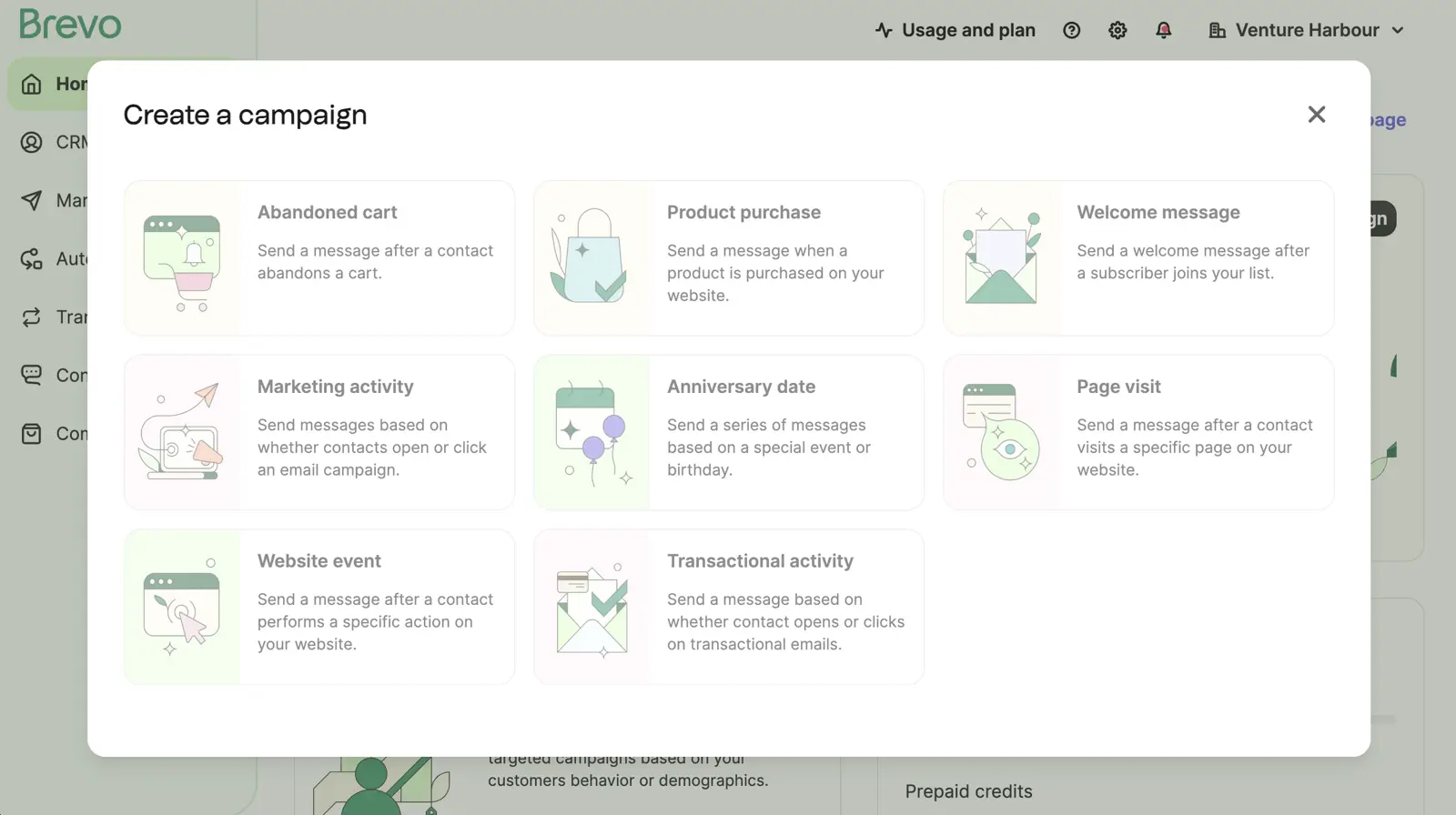
Granted, Brevo’s visual marketing automation builder is less attractive than ActiveCampaign’s. It is still powerful, and so free of bells and whistles that it’s refreshing to use. Especially after tools that require contacting support or reading documentation just to complete basic tasks.
So, what are the main benefits?
1. Pricing - Brevo is one of the most affordable email marketing tools and offers marketing automation for free if you have fewer than 2,000 contacts. While most companies looking for marketing automation will have more than this, their pricing is still reasonable and based largely on email volumes.
2. Deliverability - Having used Brevo for one of our ventures, I can vouch for its deliverability rates. Recent research reports put them among the highest in the industry.
The main downside we’ve faced using Brevo is their sending limits. While it’s likely the flipside of a strong deliverability rate, Brevo limits how many emails you can send. While it appears to be a monthly limit, it’s actually a daily limit (the monthly limit is divided by 30). This has caused us several issues when going over our quota has meant emails end up being put on hold until the next day.
We still use Brevo to this day, and consider it a stable, simple marketing automation tool. Brevo is a French company, and was one of the first marketing automation companies to declare GDPR compliance. Its history in transactional email has also led to marketing automation features that are difficult to find elsewhere, such as SMS messaging and real-time deliverability reporting.
Is Brevo the right marketing automation tool for you?
Budget-conscious teams that need automation without the enterprise price tag, and anyone sending both marketing and transactional email from the same platform. Brevo’s volume-based pricing means unlimited contacts on the free plan, making it a strong pick for businesses with large lists but moderate send volume. GDPR compliance and native SMS are further pluses for European and omnichannel teams.
Teams that send more than a few thousand emails a day. Brevo’s daily sending cap (the monthly allowance divided by 30) can cause real pain during campaign bursts. If you need deep contextual AI or a more advanced automation builder, ActiveCampaign is a better fit.
03Mailchimp
Test Lab Partner (Paid)Mailchimp is a member of our Test Lab Programme, which means we receive a fee to conduct hands-on testing of their platform. Learn more about our Test Lab Programme →I tested Mailchimp across eight areas in September 2026.
The email builder was the standout. I rebuilt a designed Slack campaign in eight minutes, faster than I managed in HubSpot, ActiveCampaign, Omnisend, Constant Contact or any other email tool I’ve tested.
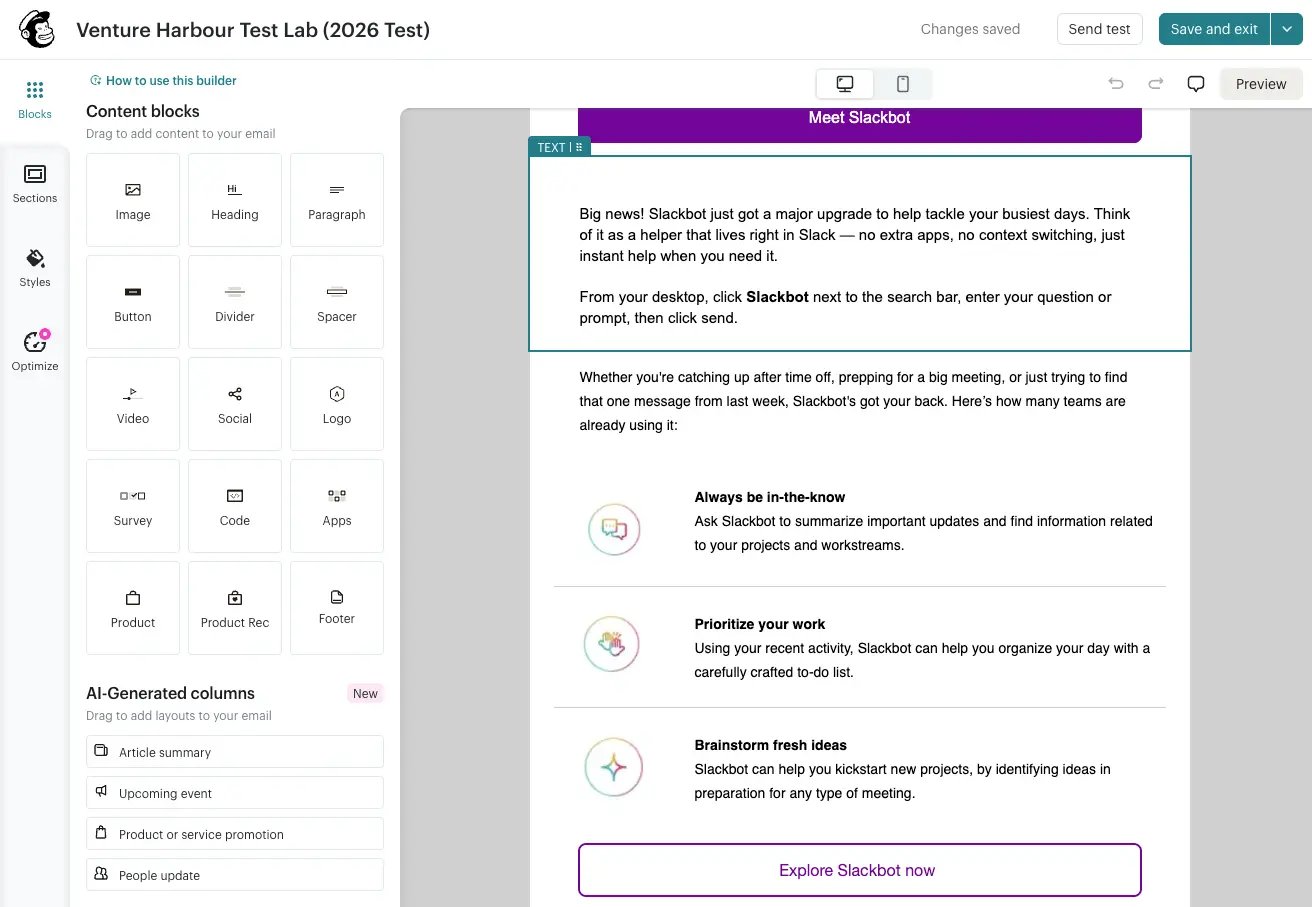
The small touches add up. Images can come from Canva, Instagram, Giphy, stock libraries or a file upload, and the block controls appear exactly where you expect them.
That ease of use suits non-technical marketers sending newsletters, product announcements or simple lead nurture emails. Template editors still have limits, so designers wanting fine control over every breakpoint will eventually get irritated.
Mailchimp’s AI is useful, but lighter than I hoped. Intuit Assist can generate text variants, suggest subject lines and populate content blocks, while the Claude connector turned a coffee roastery campaign plan into editable Mailchimp drafts.
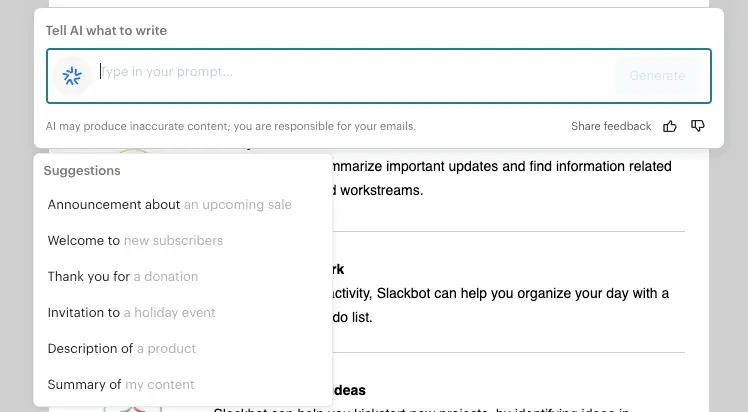
The workflow was awkward. I could get editable drafts into Mailchimp, but I could not simply ask Claude to create one campaign directly, and the in-editor optimisation advice was more generic than strategic.
The automation builder is similarly split. I built a three-email welcome sequence, added a one-day delay, created a split path and checked behavioural conditions without needing help documentation.
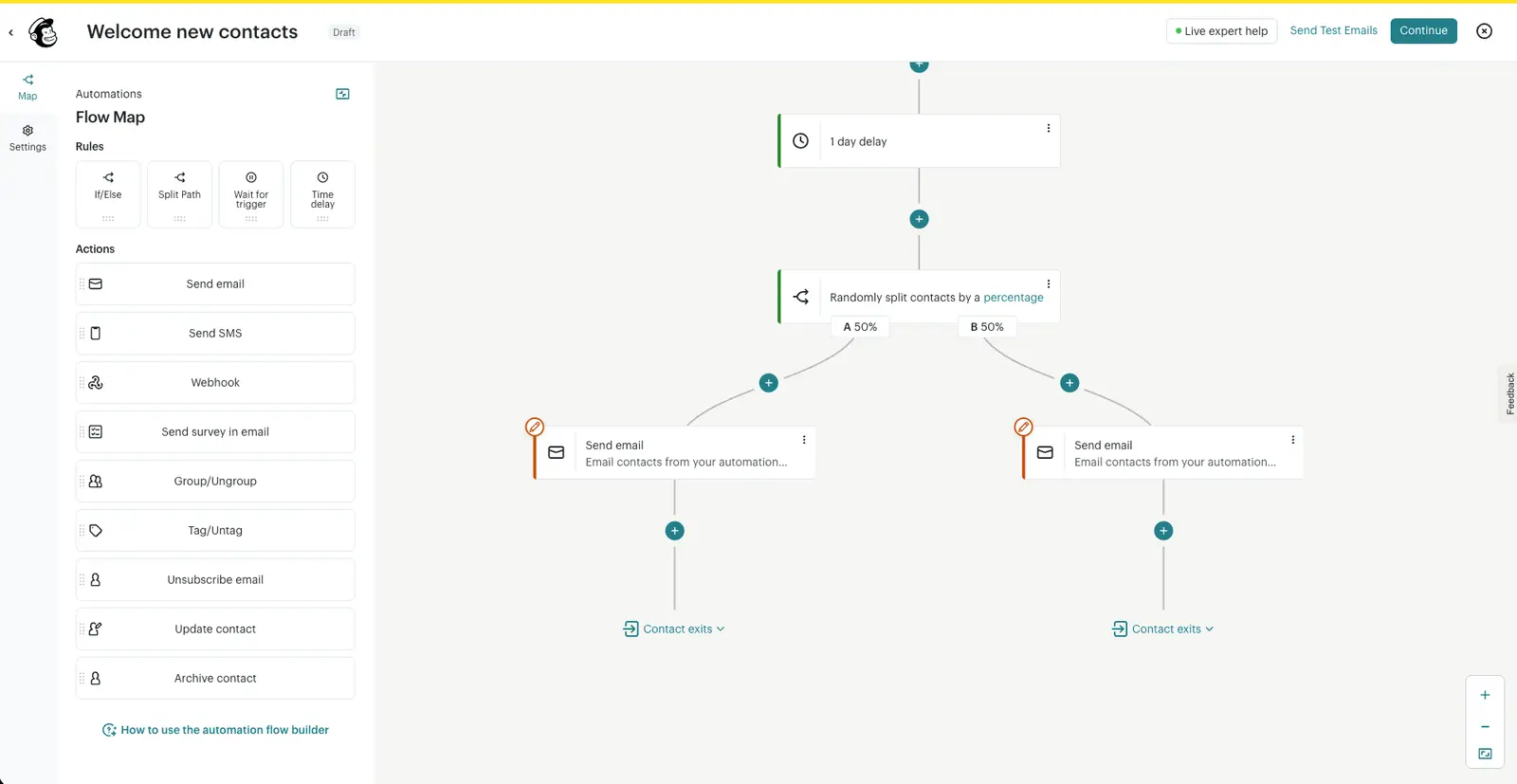
This is plenty for welcome flows, nurture sequences and basic customer follow-up. I would be more cautious if you need AI to critique journeys, CRM-triggered automation or visible actions inside tools like Shopify and Google Sheets.
Mailchimp’s free plan covers 250 contacts and 500 monthly sends. Paid marketing plans start at $13/month for Essentials and $20/month for Standard at up to 500 contacts, which is fair if usability matters more than squeezing every pound from the bill.
Here’s a video from my latest Mailchimp test:
Is Mailchimp the right marketing automation tool for you?
Owner-operators, small businesses and non-technical marketers who want polished email campaigns, simple welcome sequences and clear reporting without a long setup. If speed and ease of use are the main criteria, Mailchimp belongs high on the shortlist.
Open Mailchimp's WebsiteCRM-heavy teams, advanced lifecycle marketers and e-commerce stores that need SMS, push notifications and revenue attribution at the centre of their automation. ActiveCampaign, HubSpot and Omnisend are stronger fits for those use cases, though they ask more from your budget and your team.
04Campaigner
If ActiveCampaign and HubSpot feel like more tool than you need, Campaigner is the antidote. It doesn’t try to be a CRM, a webinar host, or a workflow studio. It sends email well, has SMS as an add-on, and ships a sensible AI layer focused on the two tasks that actually move metrics: subject lines and segmentation.
What sets Campaigner apart is that it’s been a deliverability-first ESP for over 20 years. Independent inbox-placement tests consistently put it in the top tier alongside ActiveCampaign. Even the most beautifully built campaign is worthless if it lands in spam.
Its Audience Intelligence tools benchmark AI subject lines and content suggestions against your own historical open rates, rather than a generic dataset. That gives you account-specific benchmarks compared with the ChatGPT wrappers most competitors have bolted on. It doesn’t learn from your account over time the way ActiveCampaign’s Active Intelligence does.
The automation builder is basic: branching, scoring, and conditional logic are all there, but anyone with serious workflow ambitions will outgrow it within a year. There’s also no free plan, though the 30-day trial comes with full AI access, which is more generous than the 14-day trials most rivals offer.
Pricing starts at $14/mo for 1,000 contacts on the Starter plan, and the AI suite isn’t paywalled behind a higher tier. That’s rare in this category.
Is Campaigner the right marketing automation tool for you?
Small businesses and marketing teams who want straightforward, AI-assisted email with excellent deliverability, without a six-week onboarding or a marketing suite they’ll only half-use. If you’re sending newsletters, broadcasts, and simple automated sequences, Campaigner does the job cleanly.
Open Campaigner's WebsiteeCommerce stores (use Omnisend), B2B teams that need CRM-coupled automation (use HubSpot or ActiveCampaign), and anyone whose automation needs include conditional branching or split-testing whole workflows. The automation ceiling is low, so if you’re going to outgrow it within the year, start with ActiveCampaign instead.
05HubSpot
Having demoed their software, I’d say HubSpot is over-hyped.
Pretty much everything that HubSpot offers can be found elsewhere at a much lower cost. And yes, HubSpot does offer a free version of their software, but this doesn’t include any of their marketing automation features.
If you’re looking to use HubSpot for marketing automation, you’ll need to cough up at least $800/month (paid annually), plus an additional $3,000 in onboarding fees. In other words, if your marketing automation budget is below $12,600/year, HubSpot probably isn’t for you.
But to give credit where it’s due, their software is intuitive and easy to get the hang of, which for a non-technical small business can make all of the difference. The analytics are strong, which makes it dead easy for business owners to know what’s working and what’s not.
I can see how many small businesses would be impressed with their offering, but HubSpot’s pricing can get expensive as you grow.
HubSpot charges onboarding fees in the $3,000–$6,000 range for professional and enterprise customers (these are the only plans that include marketing automation). That’s on top of a typical monthly cost between $800 and $2,500.
If it were me, I’d take this money and instead spend it on ActiveCampaign, which is a significantly more advanced marketing automation platform. With what’s left over, you could get a pro subscription to a good piece of SEO software like SEMrush or Deepcrawl, and do some training on Google Analytics.
If you’re weighing up the cost, compare ActiveCampaign vs HubSpot before committing.
I might be missing something, but based on demoing their software it does seem overpriced.
Is HubSpot the right marketing automation tool for you?
B2B companies with a 3-6 month sales cycle that need revenue attribution. Because the CRM, email, website, and sales tools are native, you can trace a closed deal back to the blog post that generated the lead.
You can also see the nurture sequence that warmed them up, and the sales email that sealed it. For agencies and professional services, that visibility tends to pay for the premium.
Anyone whose marketing automation budget is below $12,600/year. Professional plans start at $890/mo plus a mandatory $3,000+ onboarding fee, and most teams end up needing a HubSpot specialist at £80-150/hour on top. For the same money, ActiveCampaign delivers more advanced automation and leaves budget for SEO tooling and training.
06Kit
Kit is the simplest marketing automation tool here. Designed primarily for bloggers and content creators, it’s a decent option for beginners looking for basic marketing automation software.
Don’t expect any bells and whistles — Kit doesn’t even have email templates, because it encourages plain-text emails to increase engagement.
If you’re just starting out, Kit is a decent option that’s also quite affordable, but only for individual content-based businesses.
Is Kit the right marketing automation tool for you?
Recommended for: Creators with an audience they want to nurture via email — YouTubers, podcasters, bloggers and course creators. The free plan covers up to 10,000 subscribers with unlimited broadcasts, and the minimal landing pages consistently convert at 30-50%. If your goal is “build a subscriber list and send them content regularly,” Kit is one of the easiest ways to get started.
Not recommended for: Businesses that need real marketing automation — branching workflows, lead scoring, CRM, or segmented nurture across a buying cycle. Kit has no CRM and only basic automation. E-commerce businesses should use Omnisend, and any team past the creator stage should look at ActiveCampaign.
Start Free with Kit - Up to 10K Subscribers →
07Omnisend
Founded in 2014, Omnisend is a marketing automation tool for e-commerce companies.
While their platform is far from the best designed, it integrates with 70+ tools to help e-commerce marketers automate their marketing across channels.
By only working with e-commerce companies, Omnisend’s email templates are all designed to solve specific challenges faced by e-commerce marketers, from reducing cart abandonment to driving product reviews.
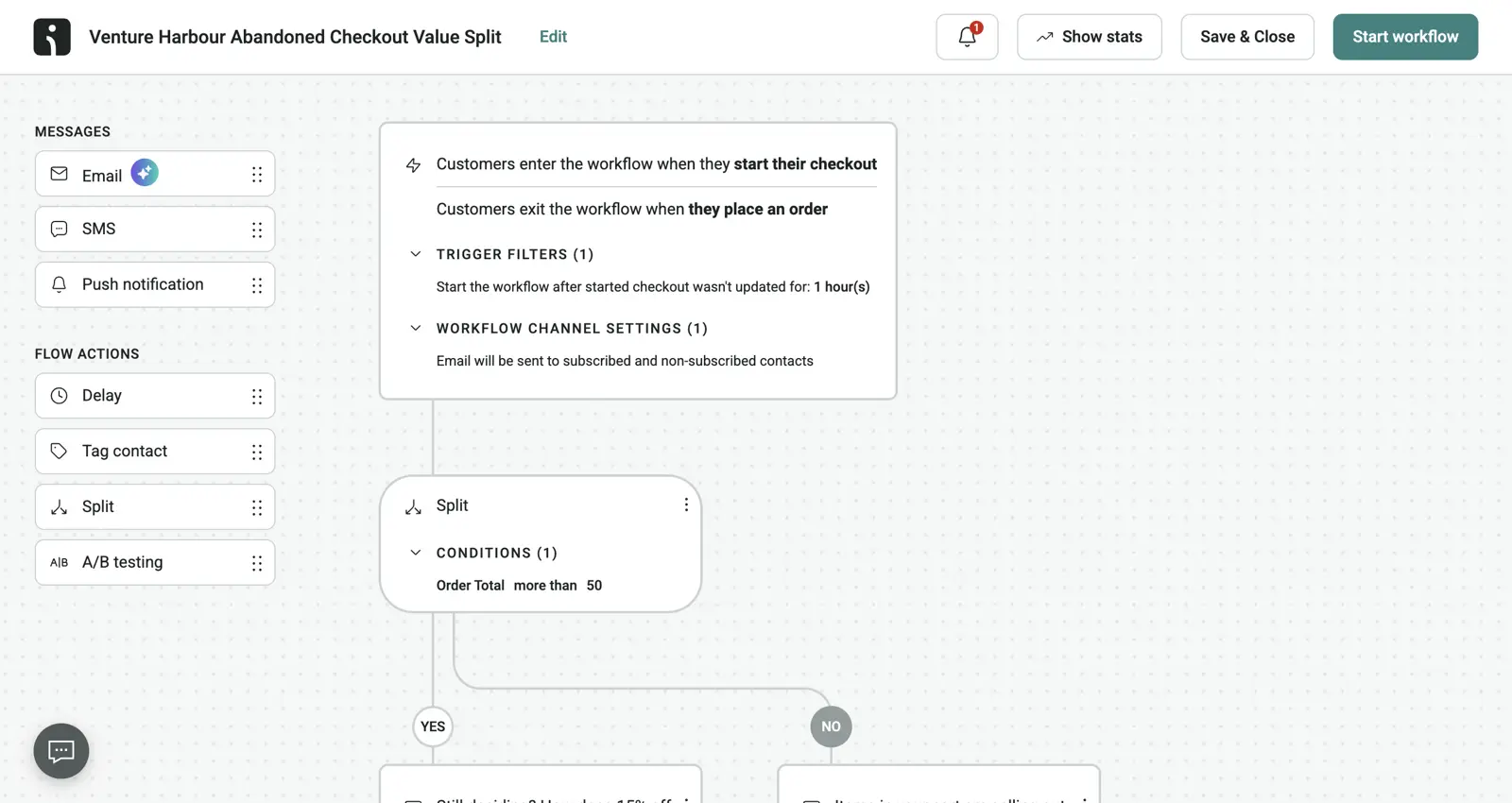
The main reason to consider Omnisend for an e-commerce business is its native integration with your e-commerce platform.
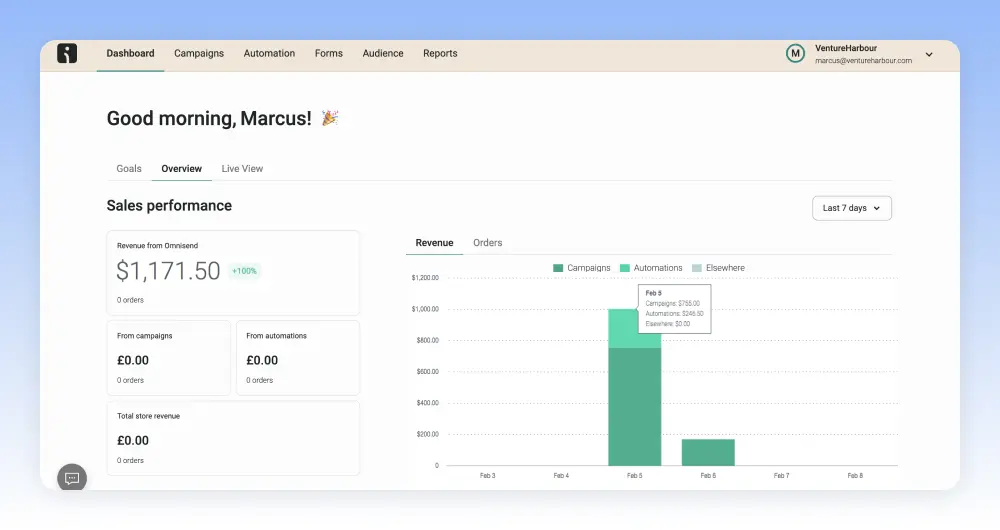
Whether you use Shopify, Magento, or any other major platform, Omnisend will hook in. This means you can trigger campaigns based on customer behaviour and see how your marketing automation impacts sales.
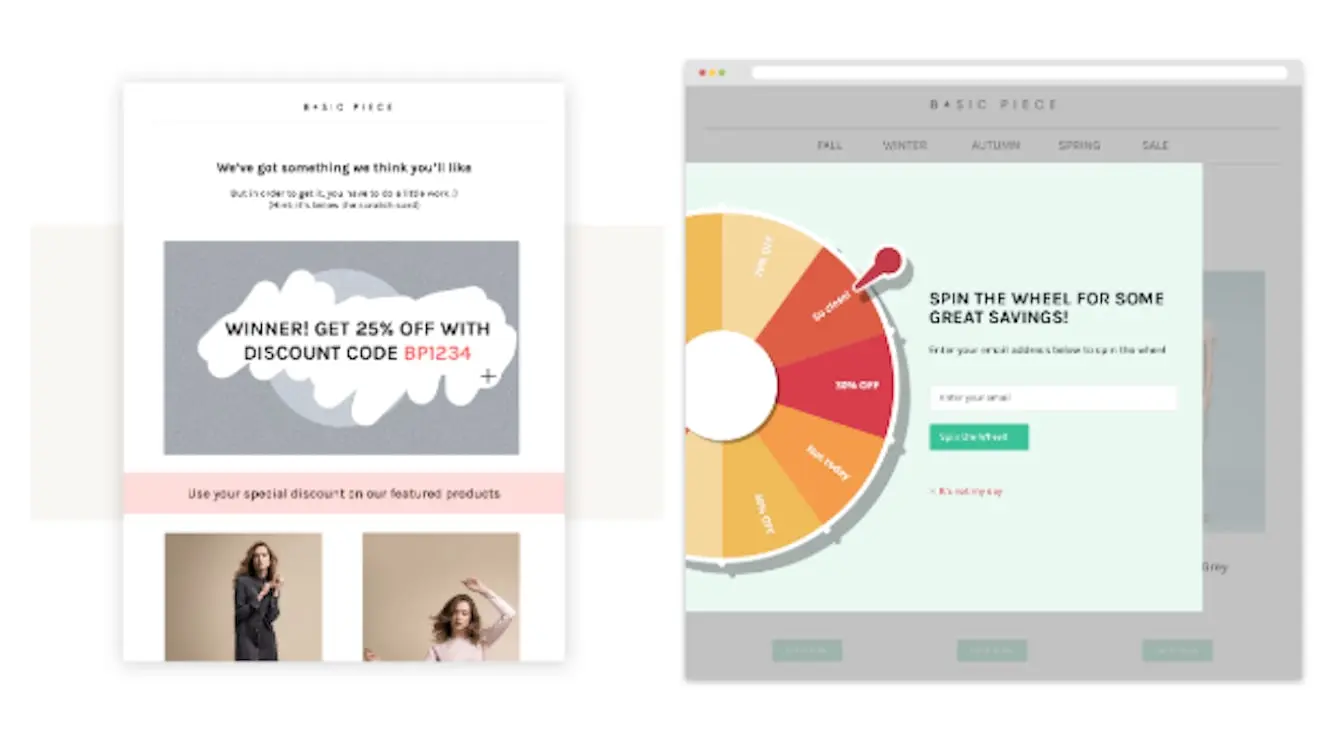
Omnisend now offers a free forever plan allowing all users to test out their automation, segmentation, and prebuilt workflows. Paid plans start at $16/month and Pro plans start at $59/month and come with unlimited email sends. Pricing will vary depending on your contact list size.
Omnisend also offer free migration from any ESP. Their team handles the list imports, automation rebuilds, and deliverability setup, which removes most of the usual switching cost.
Is Omnisend the right marketing automation tool for you?
Recommended for: Shopify or WooCommerce stores doing more than $100k/year in revenue. I’d suggest Omnisend if you need abandoned cart emails, product recommendations, SMS marketing, and detailed revenue attribution inside one tool. Native omnichannel workflows and product catalogue integration mean less tape-and-glue between tools.
Not recommended for: Non-e-commerce businesses. If you’re B2B, a creator, or anything that doesn’t involve selling products through an online store, Omnisend’s feature set will feel irrelevant. Look at ActiveCampaign, Kit, or HubSpot instead.
Comparing marketing automation software prices
It’s a challenge to compare marketing automation service prices like for like. Some price tiers are based on the number of users, while others depend on features or the number of contacts in your database.
I’ve done my best to do an accurate comparison of the different services at three different contact list sizes:
| Tool | Monthly price for 2,500 contacts | Monthly price for 10,000 contacts | Monthly price for 100,000 contacts |
|---|---|---|---|
| ActiveCampaign | Check current plans | Check current plans | Check current plans |
| Omnisend | $36 | $102 | $570 |
| Brevo | $39 | $66 | $173 |
| ConvertKit | $49 | $119 | $679 |
| Mailchimp | $45 | $135 | $800 |
| Campaigner | $30 | $79 | $649 |
| HubSpot | $150 | $420 | $3,100 |
What’s the best marketing automation software for you?
No marketing automation tool is definitively the best. The right pick depends on the shape of your business.
Best for small businesses
Winner: ActiveCampaign. Runner-up: Mailchimp.
I'd choose ActiveCampaign for a small business running segmented nurture and lifecycle sequences. Its automation gives you room to grow, but the CRM is limited and basic newsletter senders can spend less elsewhere.
If ease of use matters more than automation depth, I'd add Mailchimp to the shortlist. Its email builder is the fastest I tested, and the automation builder is calm enough for a non-technical marketer to use quickly.
Lastly, if you're running an e-commerce business then Omnisend will blow both of the options above out of the water - see the eCommerce tab.
Best for medium-sized businesses
Winner: ActiveCampaign. Contenders: Mailchimp and HubSpot.
For medium-sized businesses, the best marketing automation software is likely to be either ActiveCampaign, Mailchimp or HubSpot. The right pick depends on what else sits on your stack and how complex your sales cycle is.
HubSpot is a reasonably significant investment, so I would suggest that it's a good option for agencies or B2B service companies, where the cost would likely be offset by winning one or two extra clients per year. For teams focused on lifecycle automation, ActiveCampaign is worth considering, but its reporting and CRM are weaker.
If you run an e-commerce business, then Omnisend is a far better option than the three above - see the eCommerce tab.
Best for enterprise businesses
Winner: ActiveCampaign Enterprise.
For larger businesses, deliverability, security, support and training become a much bigger consideration. Sadly, most other enterprise marketing automation tools (Marketo, Pardot, Eloqua) that tick these boxes are frankly pretty average - their products are complex and difficult to use, and the time-to-value is measured in quarters, not weeks.
ActiveCampaign are one of the few exceptions. Their enterprise plan includes all of the dull, but necessary, features - dedicated IPs and SLAs, SSO, account management, audit logs - that you'd expect as an enterprise client, without the painful onboarding of the legacy enterprise tools.
Best for eCommerce (Shopify, WooCommerce, Magento)
Winner: Omnisend.
Omnisend was built from the ground up for e-commerce. It natively integrates with Shopify, Magento, and every other major platform. It pulls in your product catalogue, purchase history, and browsing behaviour, so you can trigger abandoned cart flows and product-recommendation emails that reference what each customer looked at.
The omnichannel capability is what sets it apart from generalist automation tools. You can build a single automation that sends an email, waits 24 hours, fires a push notification if unopened, then follows up with an SMS - all within one visual workflow. No Zapier tape required.
Best for B2B & agencies
Winner: HubSpot (with cost caveats). Runner-up: ActiveCampaign.
HubSpot is a reasonably significant investment, but it's a good fit for agencies and B2B service companies where the cost would likely be offset by winning one or two extra clients per year. Because the CRM, email, website, and sales tools are native, you can trace a closed deal back to the content that generated the lead. You can also see the nurture sequence that warmed them up - invaluable for long, consultative sales cycles.
The caveats: HubSpot charges onboarding fees in the $3,000 - $6,000 range for Professional and Enterprise customers (the only plans that include marketing automation), on top of a typical monthly cost between $800 and $2,500. Budget honestly before you commit.
If you already use Salesforce or Pipedrive, consider ActiveCampaign for lifecycle automation alongside it. Its own CRM and reporting are weaker, so I would check the integration against your sales process before switching.
Best for creators & content businesses
Winner: Kit.
Kit is the simplest tool on this list, designed primarily for bloggers, YouTubers, podcasters, and content creators. If you're just starting out and your business is "build an audience and email them regularly," it's genuinely hard to beat - especially on the free plan that now supports up to 10,000 subscribers.
Do not expect bells and whistles: Kit doesn't lean on email templates, because they encourage users to send plain-text emails for higher engagement. The landing pages are deliberately minimal, which is exactly why they convert - no sidebars, no distractions, one call to action.
If you need more complex lifecycle sequences, consider ActiveCampaign. Its automation offers more scope, but a basic newsletter rarely justifies the extra complexity and cost.
Updates
22 September 2026: Updated ActiveCampaign against our latest review, added the workflow critique screenshot and test video, and corrected the repeated CRM and pricing claims. Kept ActiveCampaign first and added its paid Test Lab badge.
18 September 2026: Added Mailchimp after testing it across eight areas, including its email builder, AI features, automation builder, support and deliverability.
July 2026 - Added a “short on time?” summary and an at-a-glance comparison table near the top of the guide. Moved the FAQ into a structured format (which now renders FAQ schema) and rewrote several answers that had drifted out of line with our current recommendations - the old version still pointed small businesses at Brevo and ConvertKit rather than ActiveCampaign. Also added links to our ActiveCampaign review, our ActiveCampaign vs HubSpot comparison, and our marketing automation CRM guide, plus a note on Omnisend’s free migration offer.
38 Reader Comments
I like that this article describes the most useful and well-known marketing automation platforms. Thanks for the comparison of tools and suggestions. They are really valuable!
At the moment, I'm using Mailchimp, but for quite some time I'm looking for a better alternative. I checked various tools, but I will go with Omnisend.
Hi,
we are a medium sized business in the insurance industry. The cost of the tool is not that important but what the tool can do is. Lead Generation and sales activity across different markets is very important to us (ie. scoring, etc.) hence Prospect.io sounds interesting initially.
Then again strategically we want to go more along the lines of inbound marketing. Hence Hubspot or ActiveCampaign Enterprise. Usability, Training/Support are the most important factors. What do you think? What would make most sense?
Hi Sven,
I agree to look between Hubspot and ActiveCampaign, as they both enable good lead nurturing capability, and the in-built CRM will massively help in terms of keeping thing simple.
They're both exceptional on the training and support side of things, though ActiveCampaign has (just last week) announced a new Customer Success Commitment, which outlines some fairly impressive standards that they guarantee to meet (inc. free migration services, access to in-person training events, and expectations around support).
But as I mentioned, Hubspot is also notoriously good in the area of support/training and arguably built their entire business off of training and education.
If you haven't already, they both offer free trials so you could give them both a test drive and see which sticks. If it's useful, ActiveCampaign has just given us a promo to offer to readers which includes $5k worth of free services (mostly around support & training) here:
https://lhwhkfmu.elementor.cloud/recommends/activecampaign-promo/
How about Sharpspring - what are your thoughts. We were considering trying it
My personal view on Sharpspring is that I used to be a fan, but we've had a large number of negative reviews come in from customers in the last year on our sister website MarketingAutomationInsider.com.
It's always hard to say how much emphasis to place on individual customer reviews, as all tools have their disgruntled customers (and reading between the lines, many of the negative reviews seem to be from accounts that were blacklisted for spam).
For now, though, I feel the options in this article are less risky.
Did anybody start trying out Mautic, the open source one?
@Jeff Kemp: Recommend you to try as am also in marketing tech consultancy, it's good for medium to big clients who want to store the information locally it's just open source.
I guess cost and usability are the two main deciding factors to select which is the best marketing automation software for your marketing automation needs. Like Fab said, if my requirement is a racing car, why would I choose a Toyota, I’d definitely go for a Ferrari?
I'm actually a certified Pardot Consultant, but I can't afford Pardot for my own company ;) Pardot is now $1250/month minimum, then $2500 or $4000 for higher plans.
It does amaze me at how much some of the marketing automation platforms cost. Even Hubspot is too expensive for us. So we use Ontraport or ActiveCampaign, and both are very good.
But if you need to integrate with Salesforce then your options are limited (unless you just want to push contacts over via Zapier). GetResponse may be a good option in this case.
Hey Jeff,
Apologies for the late response, but I thought it may be worth noting that in the last year quite a few vendors have released Salesforce integrations, which does change things a bit.
The two best integrations with Salesforce I've seen are Autopilot and ActiveCampaign, which have native integrations enabling you to update Salesforce from within those tools (so no need to setup lots of zaps).
Hope that's useful.
Great article. But, I'd say you missed a few other platforms that I'd easily put on the list before a few of your underdogs. Sharpspring is the first the comes to mind – from pricing, features and support, they are truly worth looking into. Act-On and Marketo are not on the list, which is very surprising. Depending on your company size, needs and industry, these are some of the top performers according to G2 Crowd.
Hey Jim,
So we update this guide at least once a year, and all of those tools have been featured in previous years but have gradually fallen off the ranks as some of the more affordable options have got better, and more enterprise-friendly.
We see hundreds of private reviews of the companies you mentioned and in recent years they've turned increasingly negative. Many have been acquired, lost their differentiation, and become so complex to use that you need to pay expensive consultants to use them, which is the polar opposite to what we want to recommend our readers.
Of course, there are still cases where these platforms are the right tools for the job, but increasingly those cases are few and far between.
Good article.
I agree with your conclusion - ActiveCampaign is really good and has a great price point, compared to the others.
I've used Infusionsoft and OfficeAutopilot extensively in the past, and wasn't completely happy with either.
I keep hearing people recommending them as the best systems, which surprises me, because there are a number of good (better?) alternatives, these days.
Plus, things start getting expensive with you have a list of 10k to 20k, and are emailing several times per week.
I like ActiveCampaign because: it's intuitive; cheap to start a new account and to maintain a growing one; easy to integrate with many other systems, especially if you use zapier and can do some scripting; the visual automation builder is awesome.
I think, one area they can improve is the CRM. If they improved it, you wouldn't need to bother with integrating with systems like Pipedrive, etc.
Big thumbs up! I've been researching which "All in one platform" to use out of Infusionsoft, Hubspot and ActiveCamapign and thanks to this post I will be giving ActiveCamapign a try. I like posts which are opinionated and offer their personal view after trying different ones.
I am curious about the Hubspot comments as they now feature a free version of their CRM/Sales/Marketing program. I asked about their mandatory training and got the answer that it is free. Has this all changed since your initial post? I am confused. What are the costs that drive this up?
Hey Sandra,
They do indeed! The free version does not include marketing automation though, it's just the CRM & basic email marketing tools that are included in the free/cheap version.
I've updated the article to explain this in more detail. Thanks for pointing this out!
Thanks Marcus for the comparisons, but I am somewhat confused by this post. It says 2018 in title, but yet comments are from 2014-17. I'm assuming it was originally written earlier and you've updated. I'd be curious what edits were made; how your opinions may have changed; who are the new top contenders for 2018. With all the growth in the marketing automation space in past 3 years, it couldn't be simply updating the title. Also curious if a company is already tied to Salesforce for CRM does that necessarily lift Marketing Cloud as the premier choice?
Hi Kirsten,
Yes, we update it once a year to keep it relevant. We've actually updated it twice in 2018 due to some of the bigger changes in the marketing automation landscape this year. Notably, we've included a few new vendors that have become quite popular (Prospect, SendinBlue) and removed some of the older ones that were declining in popularity (e.g. Eloqua).
Your question re. Marketing Cloud is an interesting one - I think the short answer is yes, but I see many companies automatically choose Marketing Cloud just because they're using Salesforce.
Through Leadformly (a lead gen tool we own) we work with a lot of Salesforce/MC users looking to integrate our lead forms into their CRM/automation environment, and the complexity is much greater compared to more intuitively-designed tools such as ActiveCampaign, Hubspot etc. However, having all of the data in the Salesforce environment does have a reporting/tracking advantage - but nothing that can't be achieved using other tools connected via tools like Zapier.
Thanks for the comparison. I'm also considering GetResponse's marketing automation solution. Have you tried this one?
I used to use GetResponse but moved over to ActiveCampaign because GetResponse didn't release marketing automation until ~2 years after other tools began to offer it .
I actually flew out to Gdansk in Poland to meet the GetResponse team while they were building their marketing automation product to understand what was coming up - it looks good, but nothing ground-breaking.
Nice comparison. I'd love to see how these tools compare to GetResponse marketing automation. : ) Any tips?
GetResponse is absolutely TERRIBLE.
They are one of the worst maintained systems I've ever used. Their support is substandard. Usability is a nightmare.
For the same cost, you can use the far superior ActiveCampaign.
Hello Marcus,
Thanks for your post!
Nice work, but I have the feeling that the Marketing Automation landscape has changed a lot since the post publication. Now, there are several solutions that target specifically SMEs, I'm thinking of Autopilot, ActiveCampaign or SendinBlue.
SendinBlue is interesting - we actually use them for our transactional emails for Leadformly. Weirdly, I haven't really investigated their marketing automation product yet but I think it would lack all of the features surrounding the actual email/sms sequence builder that makes other tools so valuable (e.g. a CRM, lead scoring, attribution etc).
I guess cost and usability are the two main deciding factors to select which is the best marketing automation software for your marketing automation needs. Like Fab said, if my requirement is a racing car, why would I choose a Toyota, I'd definitely go for a Ferrari?
Hi Marcus,
Very helpful article! This certainly helps to orient toward the options.
One question. Have you looked at Maropost yet?
Our company is currently considering Marpost as we are outgrowing InfusionSoft. We have looked at Salesforce Marketing Cloud (formerly Exact Target) and have also looked at Ontraport in the past.
Jay
I think Infusionsoft and Ontraport are the best marketing automation software present. People should focus on what are their requirements and then should choose one from them.
I've used both, and I was not entirely happy with them.
These days, I mostly use ActiveCampaign and I can't really fault it... plus, it costs much less run.
I'm really surprised with Hubspot prices, defenitely too expensive for SME
Great post Marcus - I use Ontraport and I love it though I have not seen all of these sites compared against each other so this was really helpful.
I do find that Ontraport seems to have great pricing overall (and yes, a lot less functions you need to get a plugin or workaround for - I wonder when you have a platform you pay a lot for and then there is a big side industry of people doing training and also developing plug ins - I think if you pay for a product that product should really keep developing and adding those plugins 'in product' and I can see that Landon and his team are continuing to refine and add functionality that is requested, so I can't fault their customer service).
As I grow towards a bigger subscriber base I can also see that Ontraport is much more reasonable in pricing, so I am pretty happy with my choice so far. Thanks.
Thanks Donna - I agree. There's so much scope for integration with marketing automation software that it would literally take a team of thousands to build all of the plugins and functionality in a short time frame. Ontraport / Infusionsoft are very similar to Salesforce in a way, by using the developer community to build the functionality around their product (which adds value to both Ontraport and their products & services).
Ontraport are definitely my overall favourite with everything taken into account. While there are a few little shortfalls, you can't argue with what they offer for the price they charge.
Have you looked at FHQ FusionHQ www.fusionhq.com ? They appear to have everything. I'd be very curious about your insights
Is a Ferrari less intuitive than a Toyota? Probably. And if I was going to get milk at the corner store, then I'd take the Toyota, but if I'm racing in the Formula 1, I'm going with the Ferrari!
Marketo is like a Ferrari: it's not less intuitive, it just has a bigger learning curve because it's SO much more powerful.
The reality is that if you want to race, you need the right training, not just on how to race F1 (marketing automation) but how to race F1 in a Ferrari (marketo training).
The great thing about Marketo is it has an extensive ecosystem to support you. For example, this marketo training ( https://launchpoint.marketo.com/hoosh-marketing/1419-marketo-training-certified/).
At the end of the day, the right product for your company depends on what race you are in: the "going to get milk" race or the F1.
Hi Fab,
That’s a good way of putting it and I totally agree. I guess where it gets less clear is when comparing a Ferrari with a Mclaren, to use the same analogy. A lot of the marketing automation tools are equally powerful (in very different ways), so it’s more a case of knowing which features matter the most to you.
Marcus
Agreed Marus. You then have to consider the pit crew and team, above and beyond just the car.
In the same way, it’s interesting to compare the various ecosystems of the marketing automation tools to see who has the most ‘support’. Marketo Launchpoint is pretty strong: https://www.youtube.com/watch?v=zi5i_64yTmcI this video compares the eco systems of the major players
Fab, what specific features makes Marketo the "Ferrari" choice for you?
Hi Marcus,
I think LeadSquared could make the list. Do check it out.
Hi Shibani,
LeadSquared looks interesting – although I can’t quite figure out what differentiates it from other small business marketing automation software. Out of interest, what separates B2C vs. B2B marketing automation from a software vendor’s point of view? I.e. what’s different about the software that gears it towards B2C companies opposed to if you were targeting B2B clients?
Marcus
Hi Marcus,
LeadSquared is a lead to revenue platform and it takes care of the lead capture to revenue cycle for several segments of B2C businesses like training providers, health and wellness, travel and tour agencies, etc. Most of the marketing automation softwares out there, are made to address needs of B2B firms and integrate with CRM. This combo is costly and becomes too complex for a typical user in a B2C setup. For such category of firms in B2C which are marketing-led, our solution can obviate the need of a CRM altogether and provide them with the best in class marketing technology.
Shibani.